
Market Outlook September 2026
The outlook for the UK economy remains subdued with little signs of improvement over the next two years. Independent forecasts published in August indicate GDP growth of around 0.9% in 2026, only increasing to 1.0% in 2027. This is well below the average annual growth rate of 2.0% recorded during the 2010s.
For the construction sector, this economic backdrop is likely to encourage a more cautious attitude to short term activity. Ongoing uncertainty around funding costs and availability, tender pricing, and overall project viability continues to affect clients, investors, and speculative developers, increasing the risk of project delays or cancellations.
This has also been shown by the Construction Products Association (CPA) who has recently reduced its forecast for construction output growth in the UK. In January 2026, the CPA predicted the UK’s construction output to grow by 1.7% in 2026. This figure has now been reduced significantly to a fall of 3.3% in the CPA’s July forecast.
The reduction in growth has been attributed to the ongoing Middle East conflict, which has weakened demand and disrupted supply, particularly in private housing, where higher mortgage rates and construction costs have reduced affordability and viability. The CPA still forecasts 1.2% growth in 2027, but significant risks remain.
Local Scottish Outlook
The Scottish construction sector continues to suffer from a lack of clarity on future opportunities. For the next 12 months, 25% of companies surveyed expect tender opportunities to increase, down from 32% in the previous quarter; 63% expect no change, up from 50%; and 12% anticipate a reduction, down from 18%.
Logistical and financial challenges remain, with The Scottish Consultants Panel reporting a widening labour cost differential between the north and south of the country, driven by shortages in MEP, civil engineering and specialist groundworks trades, along with the disproportionate impact of fuel costs on projects in remote areas.
The panel also highlighted increasing insurance costs across the industry, generated by longer supply chain routes and a generally greater risk aversion.
Contractor interest in tendering continues to improve, particularly for smaller projects where competition is stronger. On larger projects, tier one contractors remain selective on which opportunities to pursue, favouring collaborative, two-stage process with early contractor involvement. Continuing uncertainty is making fixed price contracts more difficult to secure.

The BCIS Scottish Contractors Panel considered that the level of demand has declined with 75% expecting the number of projects coming to tender to fall, with only 25% anticipating an increase.
Two stage and negotiated procurement options continue to be the preferred procurement route, with little appetite for single stage competitive tendering. This reflects the need to test scope, programme and risk allocation before agreeing a final price.
Insolvency risk within the supply chain was noted as an increasing concern, with small to medium sized contractors and suppliers tied to fixed-price contracts in a time of significantly fluctuating costs.
Both Scottish BCIS panels noted that labour shortages continue to pose challenges, with increasing material costs, and the impact of the Middle East Conflict starting to be felt on both supply and demand sides of the industry.
Overall, the Scottish market remains willing to pursue viable opportunities, but decisions are increasingly shaped by affordability, risk allocation and supply-chain resilience.
Five-Year Building Forecast
The following forecasts are based on current assumptions with regards to trade restrictions and UK economic performance. However, the figures could vary by up to 15% (+/-) per annum over the period of the forecast.
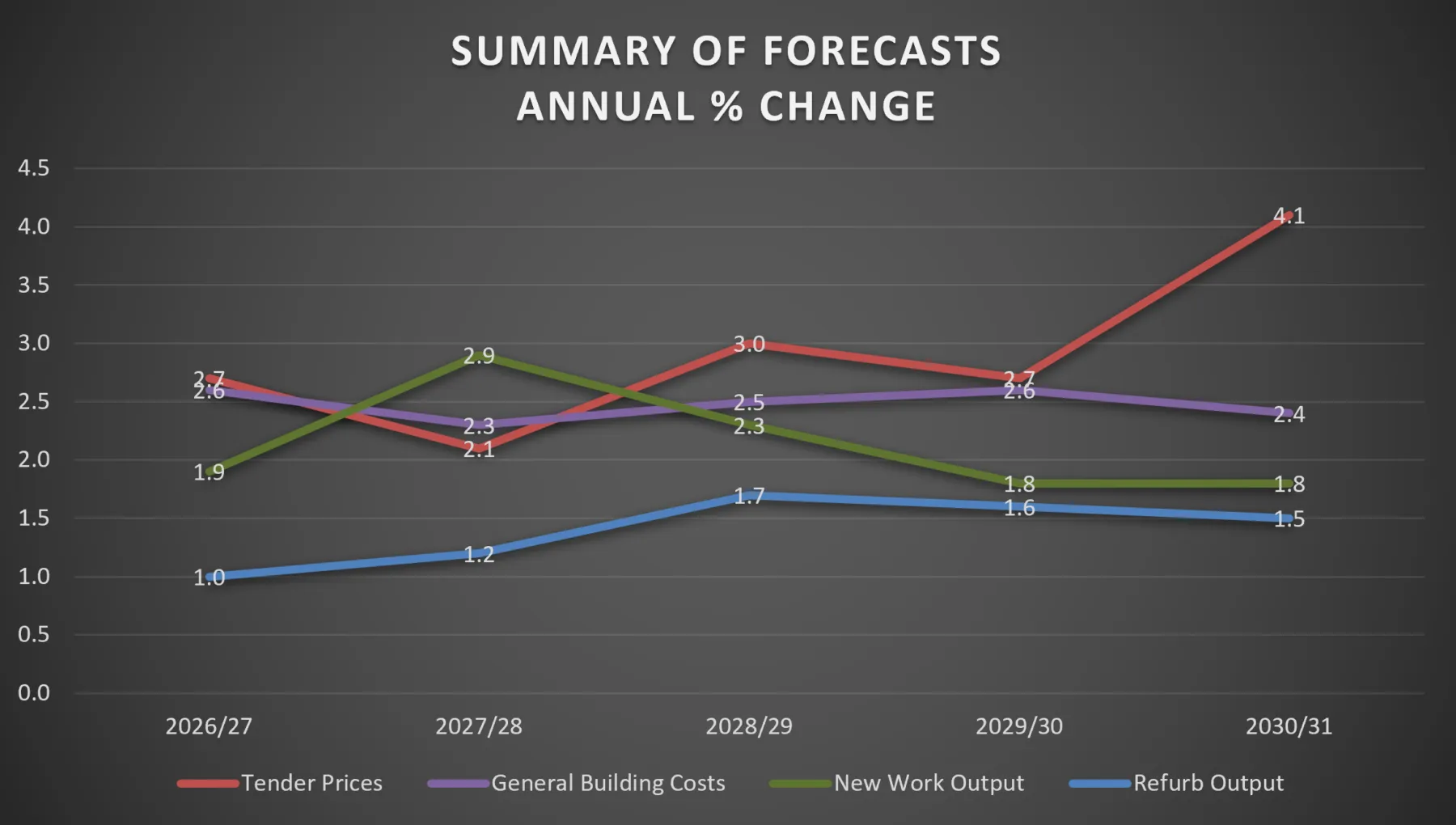
The forecast movements in construction costs and output currently shown in the BCIS Five-Year Forecast are as follows:
Tender Prices
UK Tender prices rose by 1.0% in the last quarter, with the same quarterly rise recorded in Scotland. Annual growth reached 3.2% across the UK, up from 2.8% in the previous quarter, and 3.5% in Scotland.
The UK Tender Price Index Panel considers that the effects of the Middle East conflict have yet to feed into new tender prices. Low activity levels have reduced inflationary pressure, but risk concerns have grown with the impact likely to be more gradual, potentially resulting in projects being put on hold in the short term. Reductions in the pipeline of new projects over the next 12 months was also a concern of the panel.
Tender price increases were forecast to fall to 2.1% over the next 12 months before increasing to 3% in 2027. Over the next five years tender prices are currently forecast to rise by 15% overall, no change when compared to the last forecast. These figures however are being acknowledged as out of date, with 2026/27 likely to be significantly higher given the ongoing global conflicts.
Labour Costs
Labour cost inflation has moderated and is no longer the principal driver of overall building cost increases. However, specialist skills shortages continue to create localised pressure, particularly in MEP, civil engineering and specialist trades.
The increase in employers’ National Insurance contributions has largely been absorbed. Future pressure is expected to come primarily from annual increases in the National Minimum Wage and National Living Wage, together with persistent scarcity in key trades.
BCIS forecast that labour costs will rise by approximately 15% over the next five years, unchanged from the previous forecast.
Material Costs
Material cost pressures have strengthened, particularly for aluminium, geotextiles, electrical cables, aggregates and steel. Energy-intensive products and long supply routes remain especially vulnerable to further disruption.
BCIS forecasts materials costs to rise by approximately 12% over the current five-year period. Persistently high energy and transport costs remain the principal upside risks.
Plant Costs
Diesel prices and supply remain major influences on plant costs. Even if geopolitical conditions improve, lower fuel costs are likely to pass through gradually rather than immediately. Plant costs are forecast to grow by 7.2% over the next five years, 4.8% lower than the previous forecast.
Overall Building Costs
Building costs across the UK were 3.8% higher than a year earlier. In Scotland, they were 5% higher. By comparison, the UK annual increase was 4.5% in the previous quarter. This means that cost growth has slowed across the UK but increased in Scotland compared with the previous forecast. Over the next five years, building costs are expected to rise by about 13% in total. This is 2% higher than the previous forecast, mainly because material costs are now the biggest concern.
Construction Output
New construction output fell by 2.0% over the past 12 months. Performance varied considerably between sectors, ranging from a 0.85% increase in private commercial work to a 14.85% fall in public housing. However, the latest quarter showed some improvement, with overall output rising by 0.4%.
Construction output is forecast to grow by 1.9% in 2026, followed by annual growth of between 2% and 3% over the next two years. Most of this growth is expected to come from the housing and infrastructure sectors, while private commercial work and public housing are expected to remain subdued.

Infrastructure
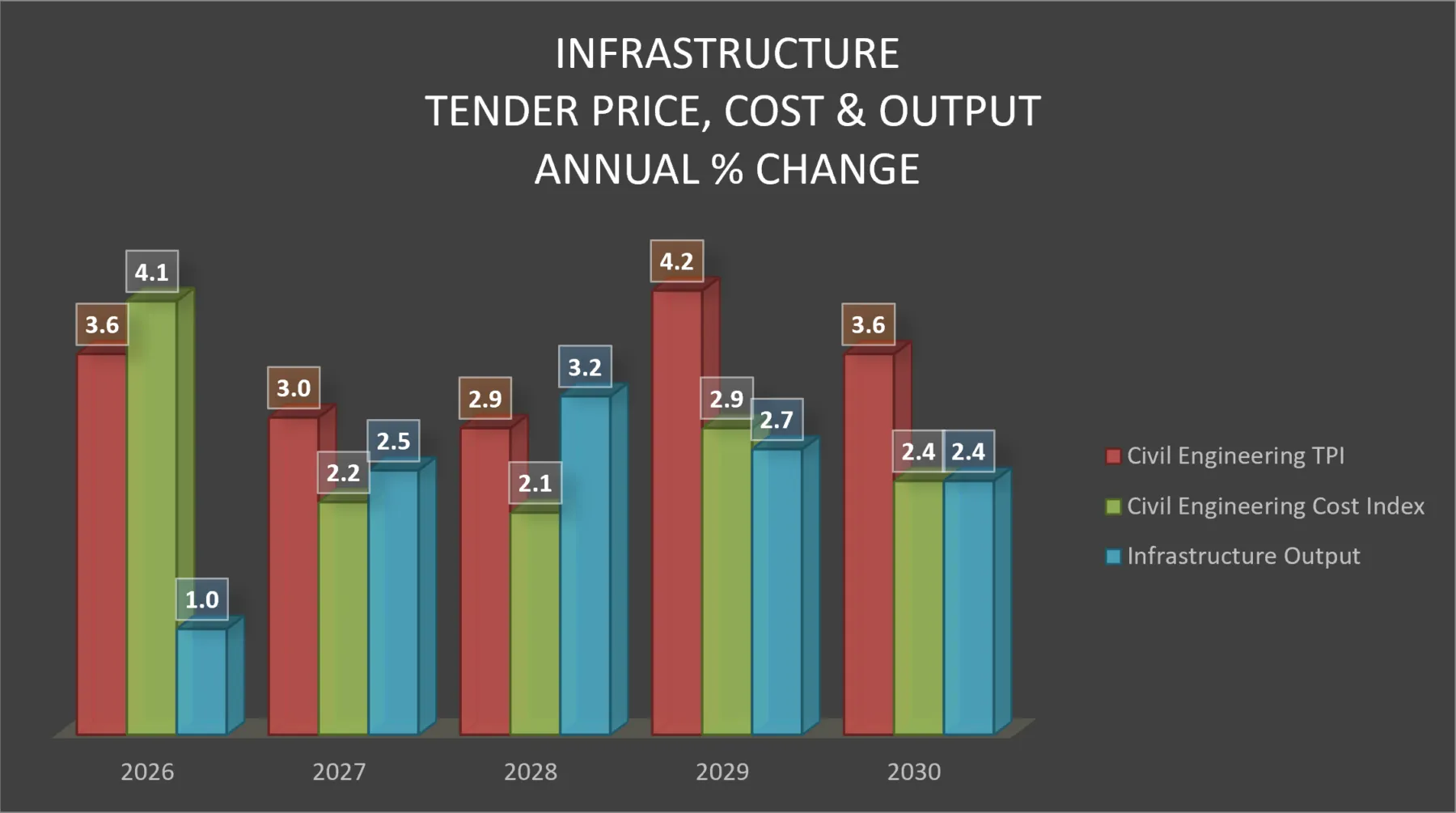
The relatively positive outlook at the start of 2026 significantly weakened as increases in energy costs and supply disruption increased inflationary pressure across the sector.
Both output and new orders fell over the first half of the year across all subsectors, with sewerage the notable exception.
This has led to concerns over the long-term pipeline which had appeared robust until recently, particularly in the energy and water sub sectors.
Five-year Infrastructure Forecasts are shown below:
Repair & Maintenance, Cleaning and Energy
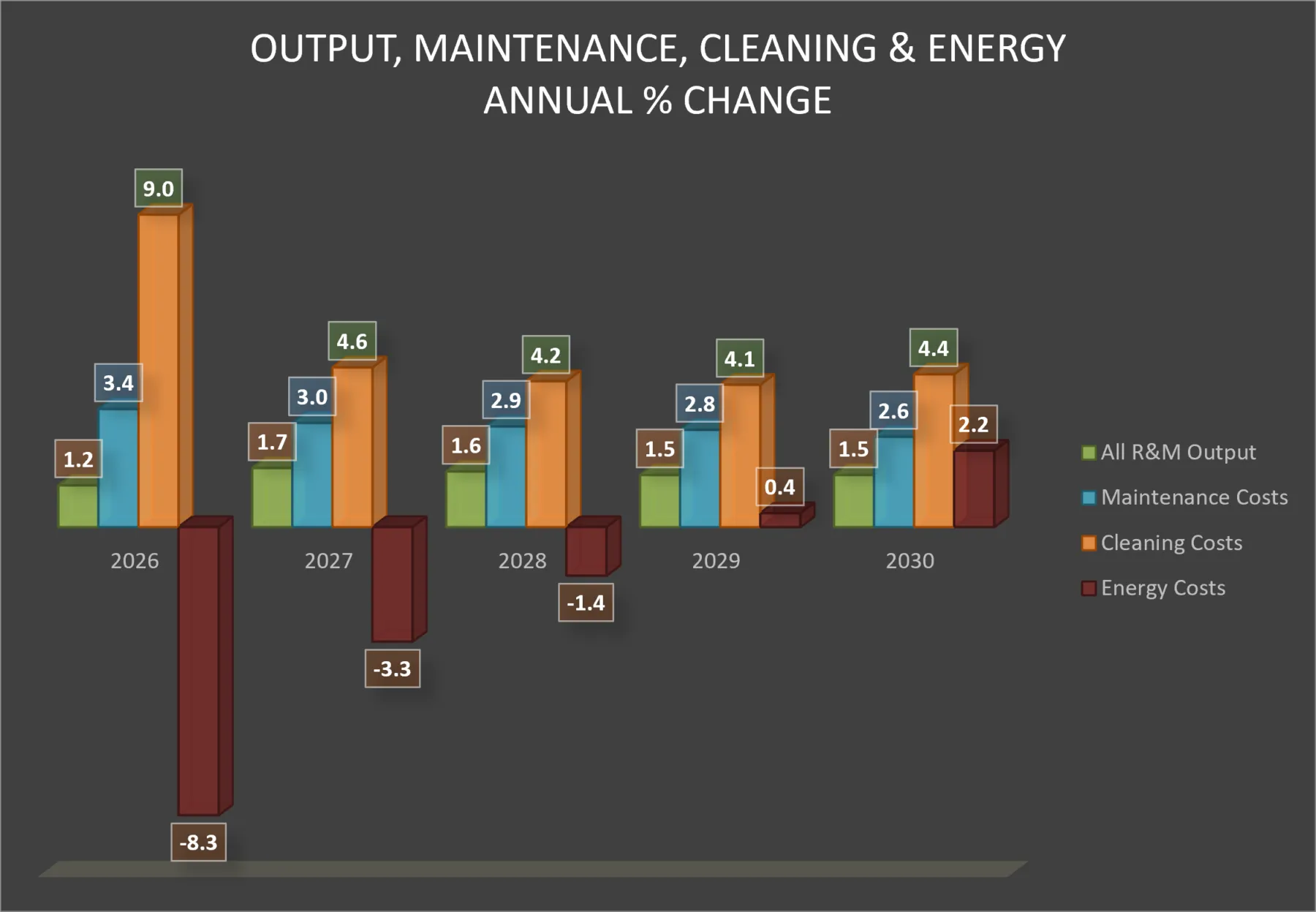
Demand for repair and maintenance is supported by the need to improve ageing assets, enhance energy efficiency and reduce whole-life operating costs. However, budgets are not keeping pace with cost growth, constraining the volume and scope of work.
Output and costs are both forecast to rise, although at a slower rate than in recent years. The exception to this is energy costs which are forecast to fall by over 10% over a five-year period, despite current uncertainty and the volatile markets being experienced.
Forecasts for the next five-years are shown in the graph below:
Conclusion
The outlook for the UK construction sector over the next 12 months remains uncertain.
Uncertainty has increased since the outbreak of the conflict in the Middle East, and its effects are only now beginning to appear. Contractors report that their input costs are rising faster than the tender prices reported by consultants.
This gap may be because contractors are temporarily accepting lower profit margins to remain competitive or are committed to fixed-price contracts. However, this can only be maintained for a short time with the likelihood of increasing tender prices over the remainder of the year.
Sign up for news
Receive email updates from Thomson Gray direct to your inbox:
- Subscribe to Practice News
- Subscribe to Market Outlook